

Bio-based plastic. Bioplastic. Biodegradable plastic. Compostable plastic. Are these types of plastic better for the environment—and for us—than traditional plastic? Made from fossil fuel, traditional plastic pollutes at every step of its lifecycle—extracting raw materials, refining those materials, manufacturing plastic, usage and finally, disposal. We produce so much traditional plastic that it overwhelms our waste management systems. Are these newer materials the solution?
What are these plastics?
Well, they are plastic. That’s our first clue.
Bio-based plastic is made from renewable plant material such as sugar, corn or potato starch. It may also contain the same toxic ingredients as fossil fuel-based plastic.
Bioplastic is like the vague term “natural.” It doesn’t have a standard definition. Bioplastic may refer to bio-based plastic, biodegradable plastic or compostable plastic. It may be made entirely from plants or made from both plants and fossil fuel. In fact, manufacturers can label bioplastic as such even if it contains up to 80 percent fossil fuel-based plastic.
Biodegradable plastic breaks down into smaller pieces—eventually. The process may occur over months—or over centuries. Biodegradable plastic may or may not contain fossil fuel.
Compostable plastic breaks down completely within 12 weeks—under the controlled conditions of an industrial composting facility.
No wonder we consumers are confused!
The problems with plastic derived from plants
You’ve likely seen “compostable” plastic at restaurants or in DoorDash deliveries—utensils, coffee lids, clear smoothie cups, clam shells, paper containers lined with plastic, each with a little green leaf or the “made from plants” imprimatur stamped on them. In addition to potentially containing toxins, these products:
May shed more microplastic. This study found that paper coffee cups lined with polylactic acid (a type of bio-based plastic) shed more microplastic particles than paper coffee cups lined with polyethylene (a type of plastic derived from fossil fuel).
Polylactic acid, or PLA, is one of the most popular bio-based plastics. After a 2018 McGill study found that synthetic tea bags shed 11.6 billion microplastics and 3.1 billion nanoplastics into a single cup of tea, tea drinkers worldwide freaked out, quickly followed by tea companies. Some began packaging their teas in PLA tea bags. Loose-leaf tea solves many problems.
Squander land. Clearing land to grow crops to make plastic removes carbon-sequestering forests and wipes out biodiversity. It also wastes food that, rather than feeding people, feeds the single-use plastic monster.
Consume resources. Agriculture consumes massive amounts of energy, water, fertilizer and pesticides, increasing the environmental footprint of plastic derived from plants.
Contaminate recycling. Bioplastic looks like traditional plastic, leading consumers to sometimes mistakenly toss it into the plastics recycling bin. Because traditional plastic is processed differently, bio-based plastic can contaminate a recycling bin, lowering further the already low rate of plastic recycling (5 to 6 percent in the US).
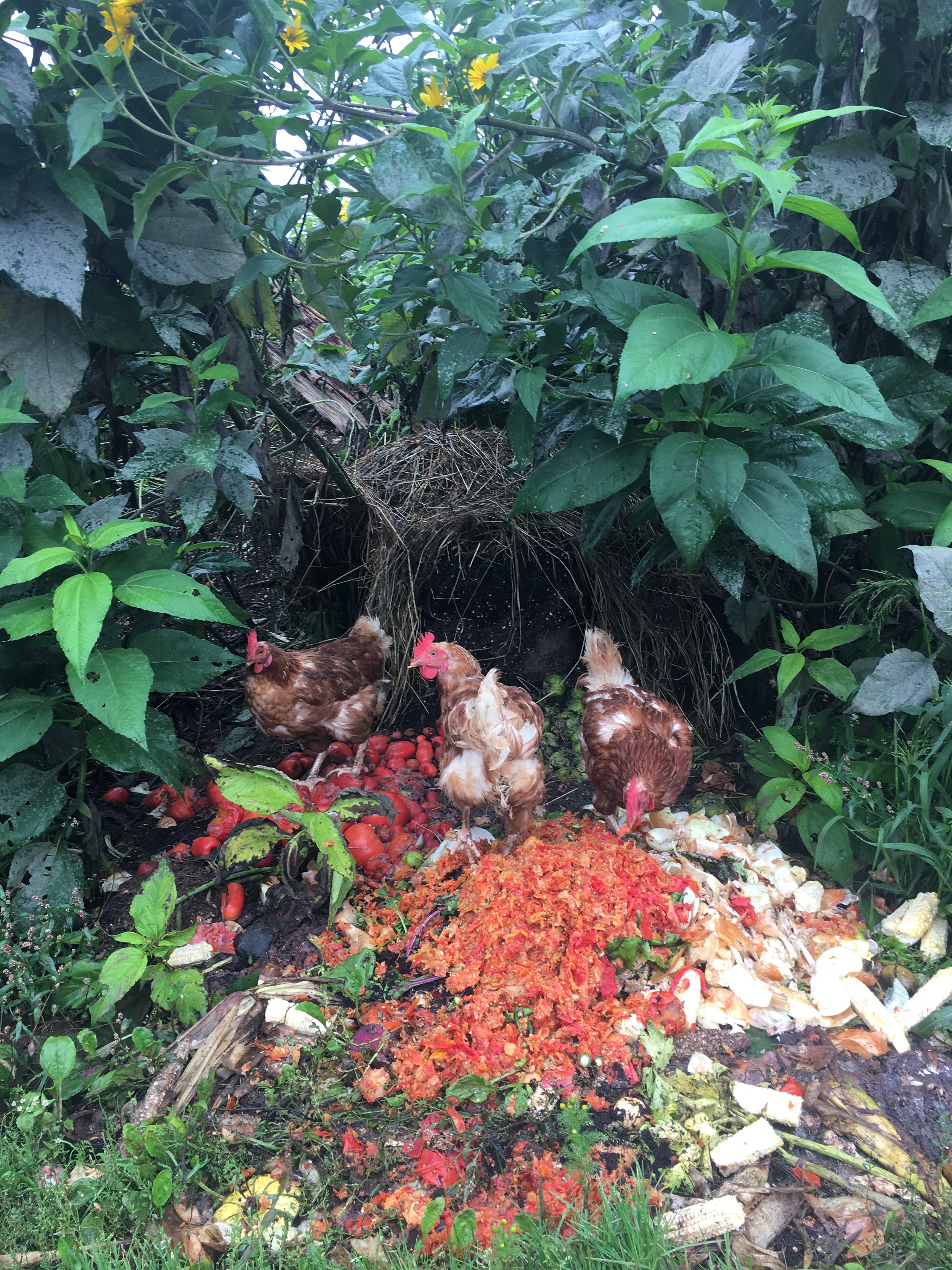
Contaminate compost. Food scraps—apple cores and coffee grounds and egg shells and so on—break down in a compost bin to produce a rich soil amendment. Compostable plastic does not. Rather than enriching the soil, when it breaks down, it may add petrochemicals and microplastics. Here’s a bit of good news though: BPI, the Biodegradable Products Institute, pushed the USDA to include compostable plastic in its list of accepted compostable materials. That would mean crops grown in compost that contains compostable plastic would still qualify as certified organic. In January, the USDA rejected the idea.
Shift the onus of cleanup onto consumers and municipalities. Just as with fossil fuel-based plastic, municipalities and taxpayers pay for cleaning up bioplastic: hauling; sorting; landfilling, incineration, or, perhaps, composting. For the most part, manufacturers do not pay for cleaning up the plastic pollution they produce. (Several states do now require industry to pay fees on the products they manufacture through extended producer responsibility laws. These fees help pay for waste management infrastructure.)
Perpetuate throwaway culture. We need to implement big societal changes to address the plastic pollution crisis and the climate crisis. Bioplastic creates the illusion of an alternative to single-use plastic without requiring industry to make any fundamental changes, other than selling consumers throwaway Y instead of throwaway X.
Cost more. Consumers want to do the right thing and many willingly pay a premium for bioplastic, believing it does less harm to the environment. Surprise!
Are compostable where facilites exist. They don’t. In small print on compostable plastic foodware, you’ll often find the caveat “compostable where facilities exist.” These facilities don’t exist for the most part. In Mountain View, California, for example, “compostable” plastic foodware goes where it belongs—in the trash. It’s not as though the city doesn’t pick up food scraps for its compost program—it does, as required throughout California. But, like many cities that pick up organics for composting, it does not accept these plastics.
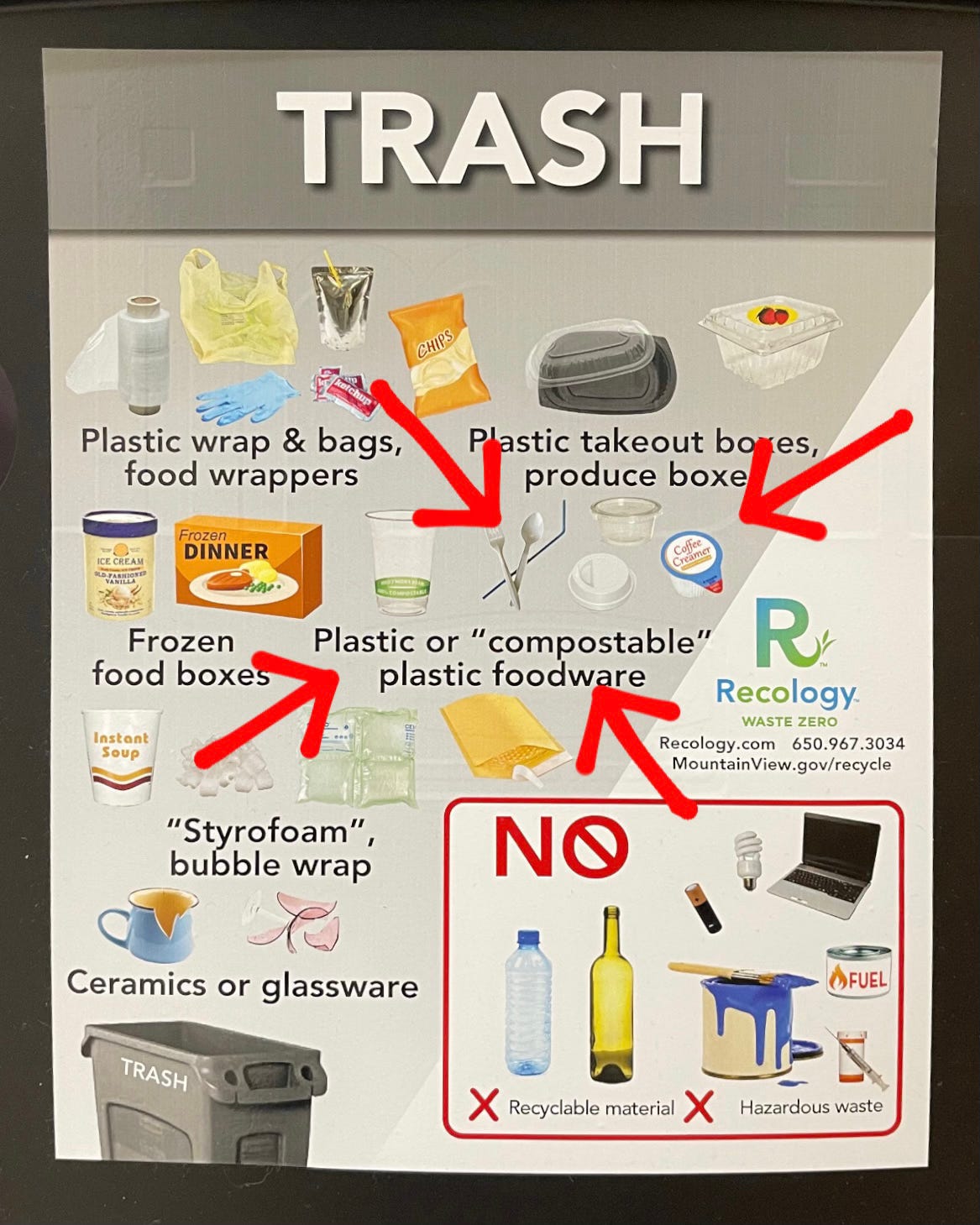
Emit methane in landfill. If plant-derived plastic isn’t composted or incinerated, it ends up in a landfill (not including what escapes into the environment). As with all organic material in a landfill, anaerobic bacteria break it down, subsequently emitting the byproduct methane, a greenhouse gas 28 times more potent than carbon dioxide.
Do not try this at home
Compostable plastic will not break down in a backyard compost bin. In 2025, CBC’s Marketplace tested how well various compostable items broke down over a three month period, including compostable plastic spoons, bags and coffee cup lids. Marketplace tested these items:
submerged in a lake,
composted in a backyard bin and
buried underground.
The compostable plastic did not break down. (The majority of the paper and bamboo items didn’t break down either.) Most of the single-use items were compostable-where-facilities-exist types of products. But even in Toronto, Montreal and Vancouver, Canada’s largest cities, compostable plastics go to landfill, according to Marketplace. Read the full story here.
Reuse is the solution
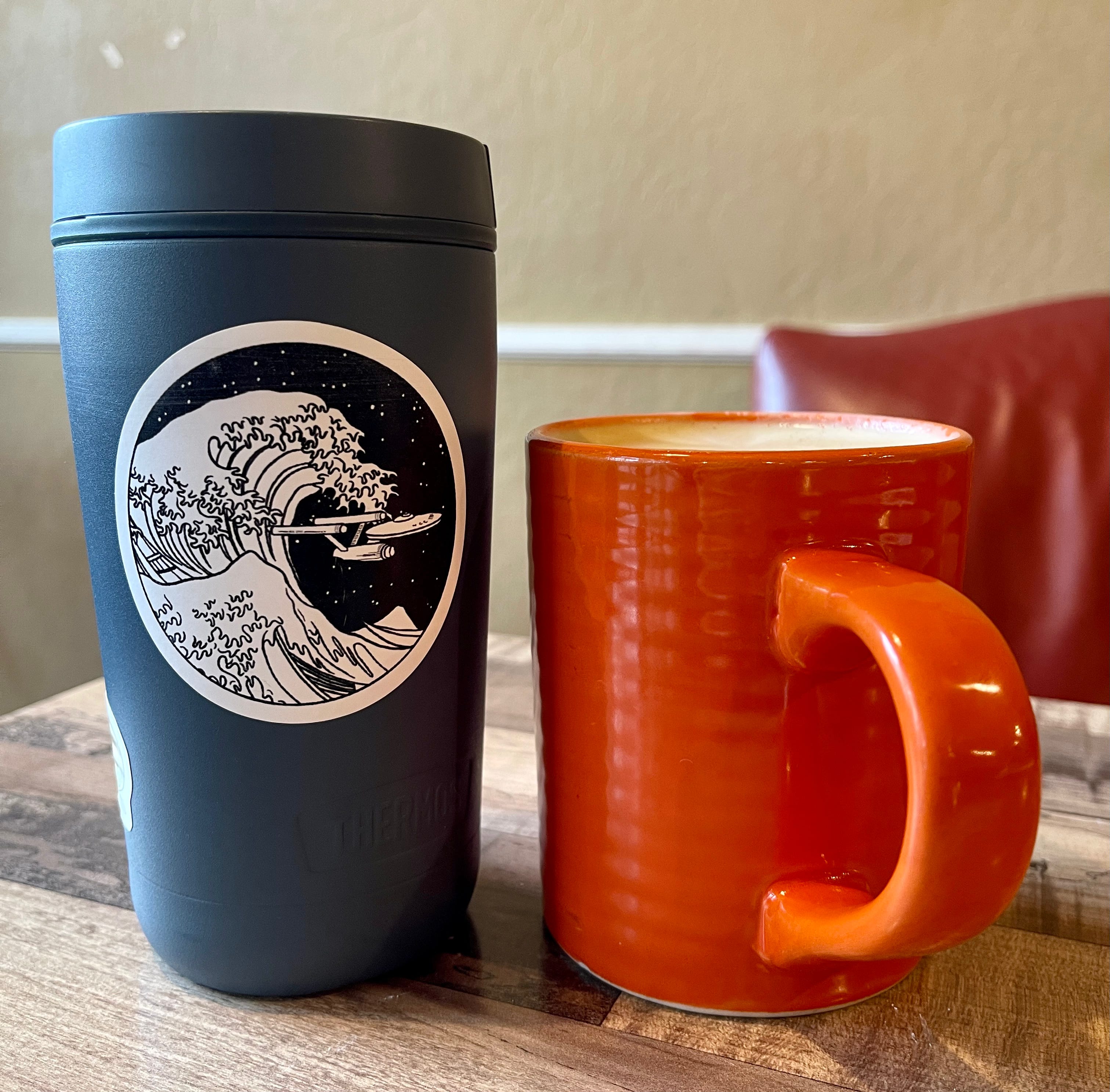
There is no get-out-of-single-use-plastic-jail-free card. Reuse prevents pollution rather than dealing with it after the fact. But reuse systems require a financial investment to build infrastructure and hire employees to collect empty containers, clean the empty containers, refill the containers, repeat. Throwing plastic containers into taxpayer-funded waste management systems—trash bins, recycling bins or where-facilities-exist compost bins—boosts industry profits.
So what can we consumers do? Don’t fall for the greenwashing. And when possible, support businesses that have implemented a circular business model such as refilleries; companies that package their products in returnable, refillable containers; restaurants and cafés that allow customers to bring their own clean containers to fill with to-go orders.
One of the best ways to cut down on “compostable” plastic foodware is to eat more food cooked at home. Cooking may not be the easiest way to reduce to-go containers—the major source of this foodware—but you don’t need to prepare anything elaborate. Simple works.
People are always so excited to tell me when single use things are "compostable" and then I ask them--nicely!--if they're going to actually compost them and they look confused and sad. It's kind of like "vegan leather," just making people feel better with half the story (or a lie).
Thank you for this article. I don't do take-out very often so this was out of my zone of awareness. However, I can promote this to my family and friends. Please keep educating us. We are not well informed without your articles, IMO.