

The freezer is a giant food preserving machine that requires no skills, no time and no additional kitchen tools, unlike, say canning, which, while not very difficult, does involve much more effort than opening the freezer door and tossing food inside.
If Turkey’s recent record 50.5 degree Celsius (122.9 degree Fahrenheit) temperature has you wondering what we can do to mitigate climate change, remember that our individual small steps do matter and with enough of us taking them, wider societal change will come.
Wasting less food is a step that just about everyone can take. When food goes to waste, so do the resources that produced that food—land cleared of trees to grow crops or raise livestock, energy, water, seeds, labor, fertilizer, capital and so on. Planting, growing, harvesting, processing, packaging and transporting food—these activities each generate planet-heating pollution, all for food that won’t be eaten. Once in a landfill, decomposing food emits methane, a potent greenhouse gas.
Project Drawdown, a highly respected guide to science-based climate solutions, provides a list of 100 climate solutions, presented under two different scenarios. “Reduced food waste” comes in at number one under the first scenario and number four under the second scenario.
The freezer makes reducing wasted food easy!
Energy efficiency
Both energy consumption and refrigerants heat the planet and yes, refrigerator–freezers check both boxes. But before anyone leaves comments suggesting we should all simply ditch these appliances or slamming me for promoting freezers, let’s look at the numbers. A whopping 99.5 percent of Americans own a refrigerator–freezer and about 27 percent own a second unit. These waste-prevention tools run in our homes 24/7. Since we have them, we may as well use them wisely.
Does the freezer consume more energy when full or when empty? Although you may see vehement arguments for both sides online, according to appliance maker Whirlpool,
Keep your freezer full, but not packed. Keeping your freezer around 75-80% full helps retain cold air. If the freezer is fully filled, food may block the internal air vents, making it harder to distribute cold air throughout the freezer.
Freezer size and food rotation
Because I mention freezing lots of stuff in my posts and at my events, people often assume I own a giant refrigerator–freezer or a chest freezer. In fact, I have a standard American-size refrigerator with freezer, so, yes, the freezer is large by the rest of the world’s standards but not by American standards.
I do freeze all kinds of food, hence the assumption I have a giant freezer, but I don’t freeze all kinds of foods all at once. Instead, I constantly rotate my frozen food stash. Nothing resides in the freezer for long except staples such as concentrated vegetable broth base or late summer tomatoes in various forms, which last until early spring. Homemade ice cream doesn’t stick around long at all. Baked goods last longer than ice cream. So, for many foods, I use the freezer for short-term storage—from a week or two to a month.
For the last few weeks, we’ve been eating down the contents of the freezer to make way for summer produce like berries and all the tomatoes (tomato purée, roasted tomatoes, tomato paste).
Organization
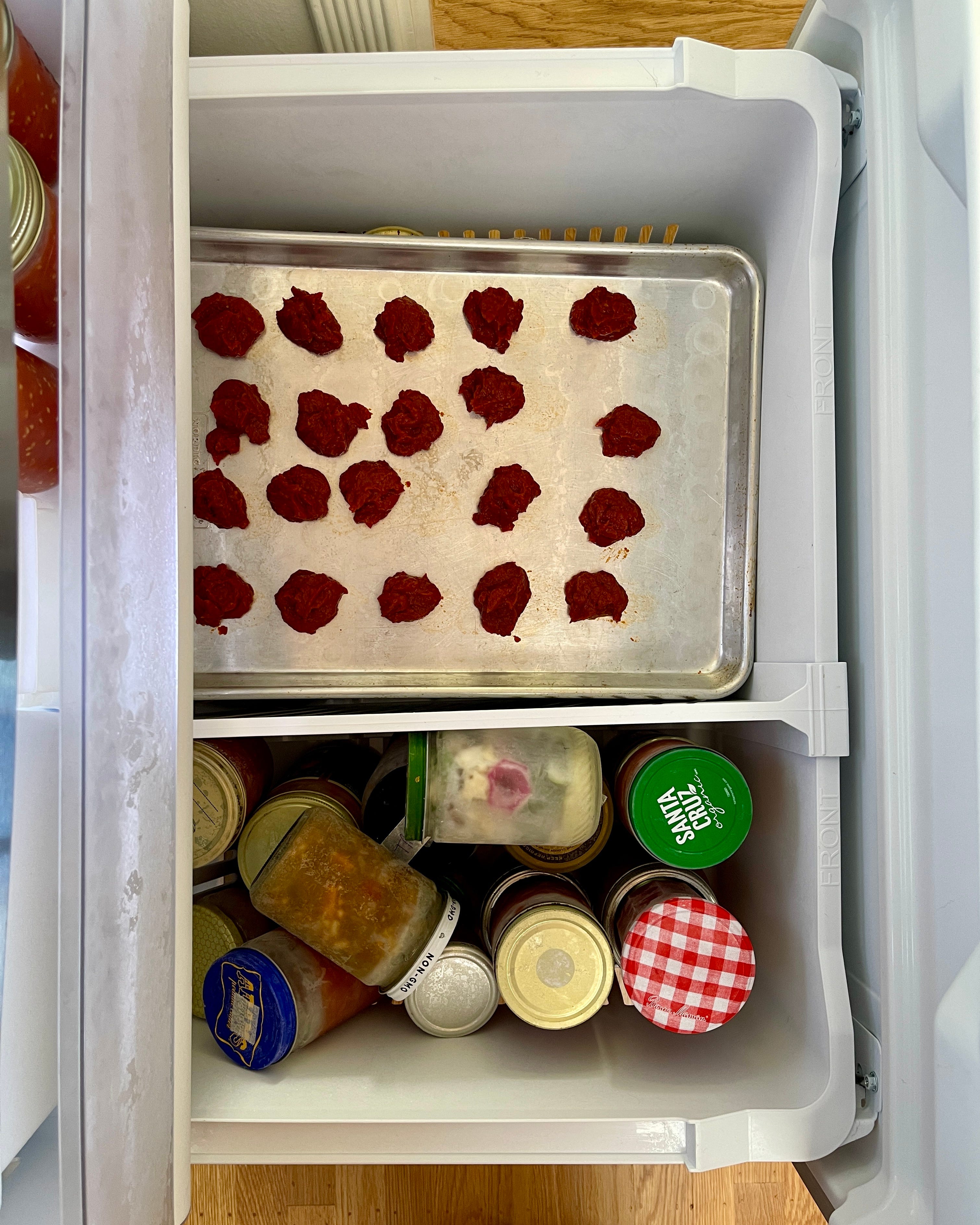
Our freezer consists of two levels—a deep lower drawer and a shallow upper drawer. A divider splits each one. I (mostly) group food by type: All the tomatoes sit together in the bottom, right-hand side. (In late fall, new jars fill that entire section.) Soup, sauces, purées and leftover meals that freeze well go on the left. Fruit usually goes on the left as well. Small jars sit in the upper drawer of the freezer—lemon juice, egg whites, lemon or orange zest, single-servings of sauces like pesto… Breads and cookies stored in cloth produce bags go wherever they fit. This simple system works for me. You may want something more elaborate.
My family would probably prefer that I mark what’s what but between the food’s location and a glance, I can tell what it is. Okay, that one time I did thaw out pumpkin purée for muffins and it happened to be dal. Lemon juice and egg whites also look strikingly similar… You may want to mark the contents on each container. You may also want to jot down (and update) the freezer inventory and hang it on the door (this will also reduce the number of times the door opens, keeping the contents cold).
First-in, first-out (FIFO) works well in the refrigerator, where food has a shorter shelf-life. With FIFO, you’ll polish off last week’s carton of milk before opening the new carton of milk. You may want to organize your food in the freezer the same way, with the food you froze first at the front and the food you froze later at the back.
Freezing and thawing
Cool hot foods first before freezing them. Freezers (and refrigerators) work harder and consume more energy to cool down hot food. It seems that cooling down food before freezing it may also prevent glass containers from cracking but I have no scientific evidence to back this up—just my own observations and comments from other jar aficionados.
Always leave head space at the top of glass jars for the food to expand as it freezes—between one and a half to two inches.
To thaw most foods, move them to the refrigerator to thaw overnight for using the next day. If, say, your jar of puréed cooked sweet potatoes hasn’t completely thawed out, you should be able to easily remove it from the container and heat it up. Some foods, like bread or muffins, thaw out in a few hours on the counter. (Never put bread in the refrigerator—it dries out.)
Shop-the-freezer weekly challenge
Consider regularly challenging yourself to pull one or two items from the freezer and cook a dish with them. This challenge will help rotate the freezer and you’ll sometimes pull out fully cooked meals, giving you the night off. Plus you’ll likely enjoy the adventure!
Freezing equipment
Jars. I can never have enough jars and most of my giant collection didn’t cost me a dime. I freeze almost everything in them. I use any wide-mouth jar with flush sides and haven’t had a problem with them breaking. If you’re concerned about jars breaking, opt for Ball jars like these. If you use other jars, choose jars with have flush sides and no narrow necks or shoulders. I love all the jars of all sizes but peanut butter jars are my favorite. Each stores one generous meal.
Metal tiffins. Because I’d rather use my few tiffins for lunches and to-go snacks, I don’t freeze food in them often. But they work well.
Cloth produce bags. I use these thin bags to freeze baked goods: bread, quick breads, muffins, cookies, biscuits… These don’t go in there for a 6-month deep freeze. They would dry out. Plastic would work better for the long haul but on the other hand, microplastics have infiltrated our food chain. The soil now contains more microplastic than the oceans—which contain massive amounts—with plants drawing up tiny microplastics through their roots. We need regulation to address this crisis but in the meantime, I do what I can. Besides, bread, muffins and cookies would never make it to six months in my home. They don’t last six weeks! We eat them quickly, usually within two to three weeks (let’s be honest, a few days for cookies). Go here for strategies to avoid consuming microplastic.
Stuff you already have. On the other hand, if you have plastic Tupperware, you may want to use it until it breaks. This is what I did when I broke up with plastic. As plastic kitchen tools broke down, I replaced them with glass, metal or wood counterparts. Throwing away functioning tools only to buy all new stuff seems wasteful—and expensive!
Baking sheets. To freeze tomato paste and concentrated vegetable base, I freeze tablespoon-size blobs on a baking sheet, set that in the freezer and after the food has frozen, transfer the blobs to jars.
Ice-cube trays. These also work well for freezing the aforementioned, semi-solid tomato paste and vegetable base but also liquids like lemon juice or olive oil filled with fresh herbs.
What to feed the freezer
Fruit. Wash fruit, cut it up into bite-size pieces, spread across a baking sheet and freeze. Once frozen, transfer to jars or other containers. Go here for more info.
Fruit juice. Whether you have just a bit of leftover lemon juice from squeezing lemons for a dish or a couple of cups of orange, grape or apple juice, fruit juice freezes well.
Citrus zest. This adds so much flavor to quick breads and cakes. It makes a good flavoring for kombucha also. Zest citrus before juicing.
Fruit scraps. Depending on the variety, ferment a batch of fruit scrap soda or scrap vinegar with them.
Vegetables. Go here for blanching and freezing vegetables.
Tomatoes. They get their own special mention not only because they kind of defy categorization (yes, tomatoes are fruit but we usually refer to them as vegetables). Roasted tomatoes, tomato purée, tomato sauce, tomato paste, pizza sauce…
Cooked pumpkin, squash or sweet potato purée. Thaw these to make pies, muffins, quick breads or quick soups.
Fresh herbs. Chop herbs, place them in an ice-cube tray and fill each compartment with olive oil. When the time comes to cook, grab a few frozen cubes and toss them in a pan to sauté onions and other vegetables.
Vegetable scraps for free vegetable broth. Add to your stash until you have enough scraps for a batch of broth. Never pay for vegetable broth again.
Bones for bone broth; raw or cooked meat. Even if you don’t eat meat, you probably support omnivores not wasting any.
Milk, cream, butter and cheese. These all freeze well and are convenient to have on hand (like much of this list).
Eggs. Whisk them before storing them in a small jar.
Cooked beans in their broth. These are so handy to have on hand.
Strained leftover bean broth. So tasty. Bean broth thickens up soupy dishes. Or use the broth to cook more beans. It adds flavor and nutrients—and conserves precious water!
Leftover soups, stews, dal, chili. I almost always have a jar or two of one of these in the freezer. For a busy weeknight, I’ll thaw them out for dinner.
Sauces. Freeze all kinds of sauces such as pesto, cranberry sauce, applesauce, Alfredo sauce, Bolognese…
Tofu. In addition to preserving tofu, freezing it renders a wonderfully chewy, flavor-absorbing texture.
Leftover pulp from making milk. Nut or seed pulp, coconut pulp and soybean pulp make a great addition to homemade granola.
Cooked grains. Leftover cooked rice, wheat berries and other grains freeze well.
Bread. Because sliced loaves of bread dry out around the edges when stored in cloth produce bags, I store my loaves whole. Flatbreads like naan and tortillas also freeze well.
Muffins, quick breads, cookies, biscuits. I use a cloth bag for these as well.
Non-food items
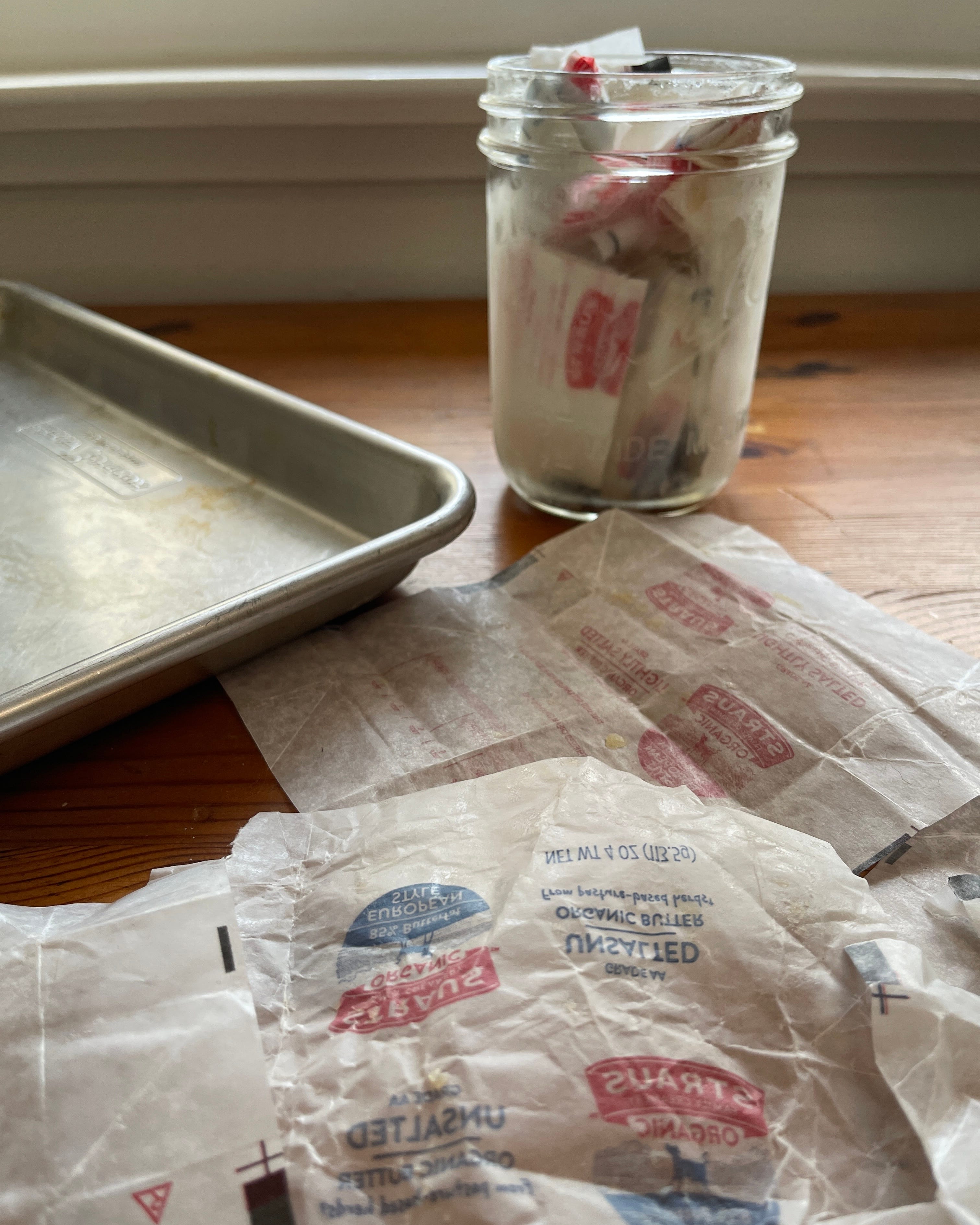
Butter wrappers to grease pans. When you need to grease a pan, remove a few wrappers from the freezer and rub their residual butter onto the pan.
A block of ice. I have one of these in the freezer at all times. I fill a stainless-steel bowl with water and freeze it. If the power goes out, that large ice block goes into the refrigerator to keep food cold. (Go here for preventing spoilage during a power outage.)
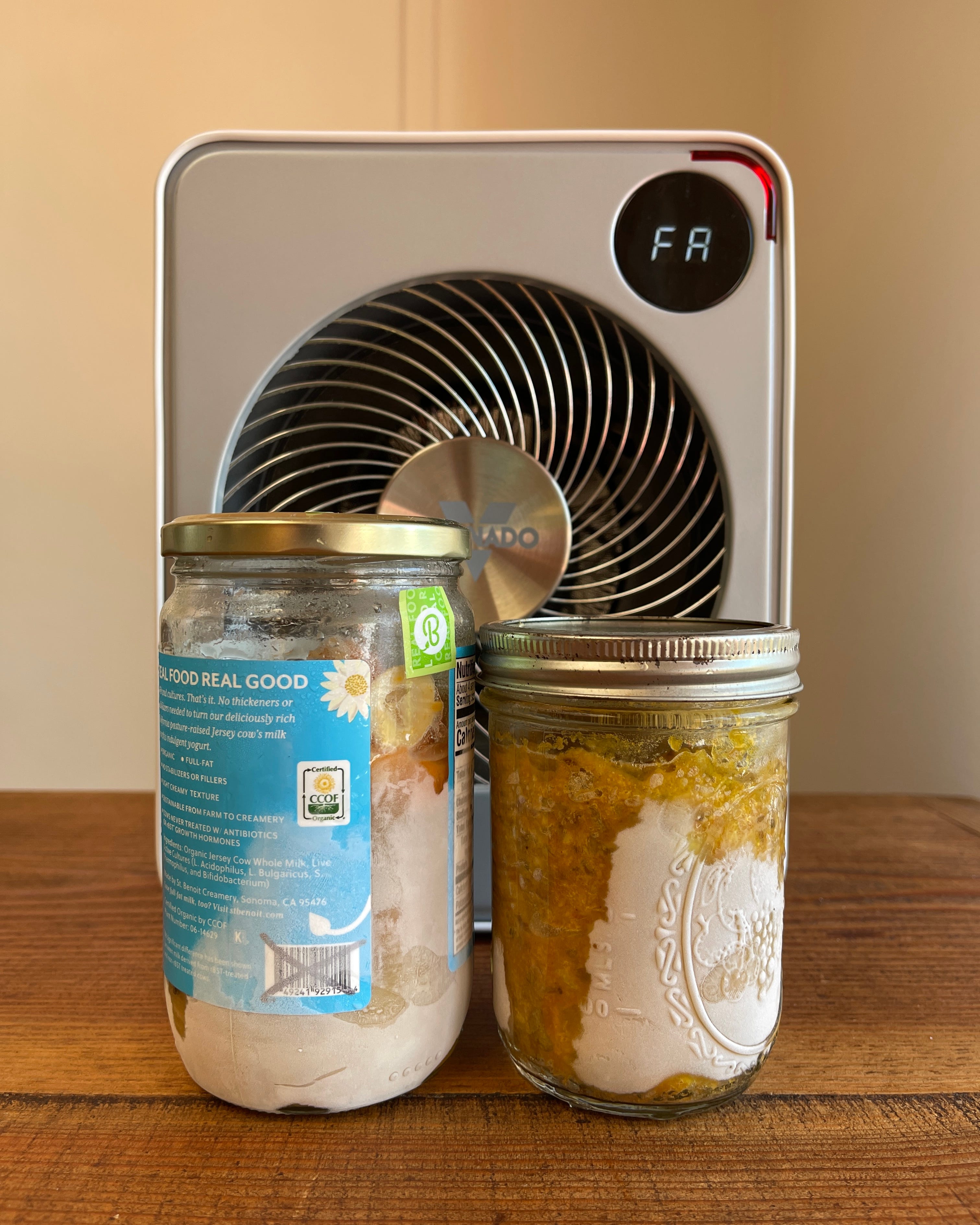
On a hot day, thaw out dinner in front of a fan. The air will blow over the frozen food and cool the space down a little. Every small drop in temperature helps during a heat dome, just as every fraction of a degree matters to mitigate climate change.
Hi from Germany :-)
I've just read your latest post and wanted to let you know that it is always a real inspiration to read about your very practical hints for a better world and good food and living. I whish everyone would act the same way you do! Keep on going and convincing...
Cheers
Jakob
After reading that most of the world uses less refrigeration than us, and has healthier, fresher, tastier food, and they waste less, I noticed that my fridge and freezer was my biggest cause of pollution and depletion -- that is, how I hurt people most.
I tried unplugging them, having no idea how to make it. I made it three months my first try, six my next, and made it the full year my third try so I kept going. Next month I begin my fifth year.
Hands-on practical experience led me to learn how to shop and prepare food differently, ferment, etc. Refrigeration *causes* many places losing access to fresh food or for it to cost more. I didn't realize until I found an alternative that I was helping cause food deserts by not shopping fresh.
Like everyone, I live in a culture that makes it difficult to buy fresh and local, but the more I do, the more I find how to do it better. Equally important, the more I help improve access for others with less access than I have. At first I took more time to shop and prepare, but that was just inexperience. Hands-on practical experience taught me to save time and money.
The more I learn about the whole cold chain, the more I see how it impoverishes, deprives, pollutes, and depletes. The evidence doesn't show healthier outcomes.
Refrigeration isn't necessary. Nobody before about a century ago refrigerated. It seems like a good idea and has some applications, but if nearly everyone stopped refrigerating, we'd reduce waste, pollution, and depletion while improving access, health, local economies, flavor.
It seems counterintuitive, but experience belies "You have a powerful tool in your kitchen that reduces wasted food." Experience has taught me that "You have a powerful tool in your kitchen that causes wasted food."