
Clean the Bathroom, Do Laundry Without Leaving Footprints
Cleaning our homes doesn't have to leave a mess behind

We can enjoy both clean homes and a clean environment. One need not sacrifice the other.
Last week, we cleaned our kitchens the low-waste way. Today, we’ll tackle the bathroom, laundry and a couple of other spots. Again, I don’t earn a commission if you buy any products I mention below. I just want to provide alternatives to harsh cleaning products and throwaway tools.
Bathroom
Surface cleaners
Scouring powder. Baking soda scours the sink and tub effectively. If you want to get fancy—but not all that fancy—make my citrus scouring powder. First, dehydrate citrus zest (I simple spread zest across a deep dish and cover it with a towel), then mix it with baking soda and washing soda. Go here for the full recipe.
All-purpose citrus cleaner. As I mentioned last week, lemon rinds steeped in vinegar make a good all-purpose cleaner. A natural compound in citrus, d-Limonene, helps break down oil. To make the cleaner, steep citrus peels in vinegar for a couple of weeks, strain and dilute with water. Store in a spray bottle and use as needed—but not on granite or marble countertops because vinegar can damage them. Go here for the recipe.
Toilet cleaner
To dispose properly of caustic toilet pucks, they must go into hazardous waste. So why on earth do we put these in water that eventually ends up in our rivers and lakes? Environmental Working Group (EWG) grades this Clorox toilet puck an F. As I scrolled through EWG’s toilet cleaner ratings, two supposed “green” products scored Cs and Ds. Instead, use:
Vinegar. Cheap distilled vinegar works well to clean the toilet. Pour in about ¼ cup, let it sit for 10 minutes, scrub with a toilet brush and flush. I always have kombucha vinegar on hand and use that.
Kinder, gentler toilet cleaning tablets. A couple of people have told me they love Blueland’s toilet tablets. The company website says they contain no “parabens, VOCs, ammonia, phthalates, chlorine, bleach, polyvinyl alcohol (PVA/PVOH), methylisothiazolinone, benzisothiazolinone, octylisothiazolinone or quaternary amine.” I haven’t tried them myself but, as I said in last week’s newsletter on kitchen cleaning, I’ve liked the Blueland products I have tried.
Cleaning tools
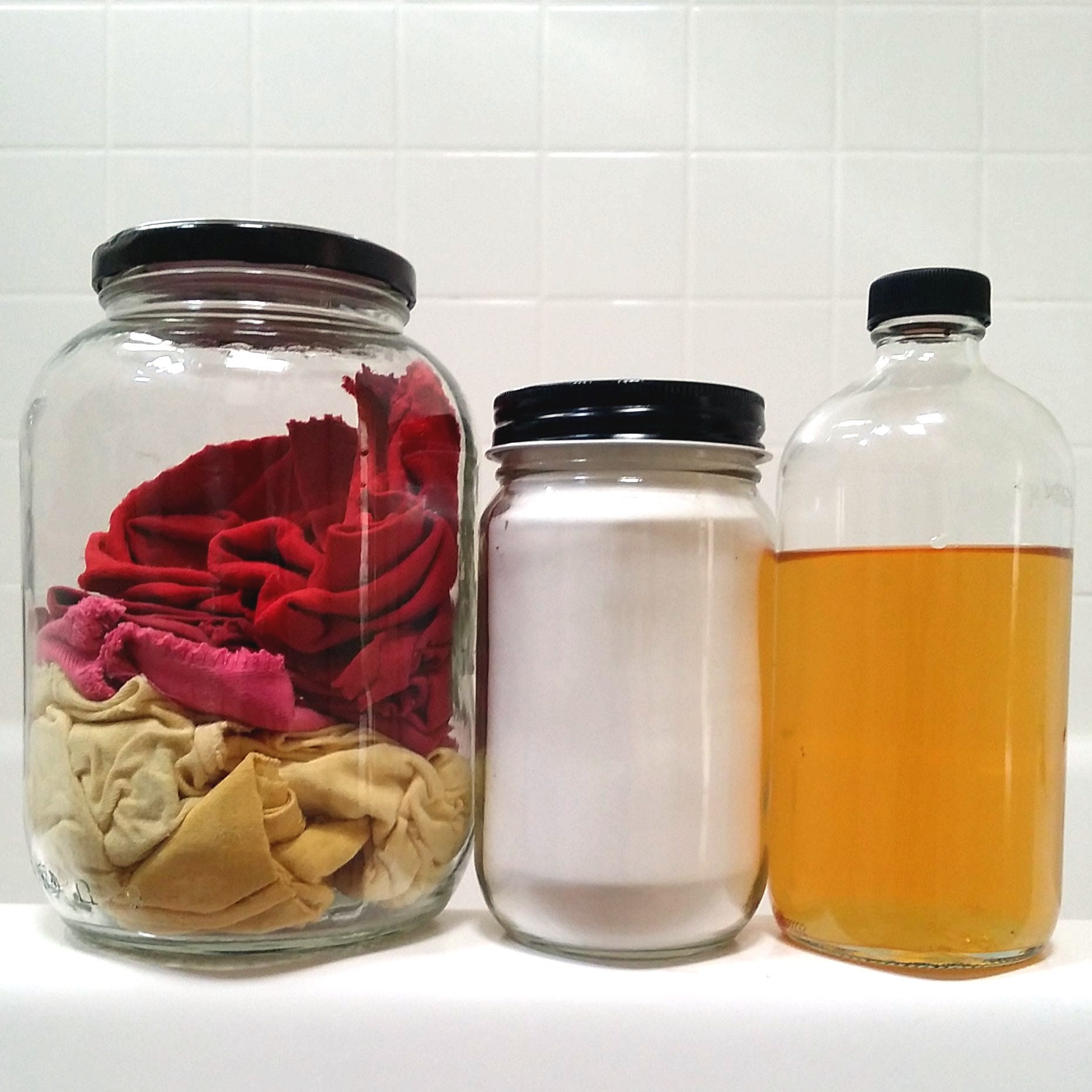
Rags. Old, worn cotton t-shirts make great rags to clean bathroom surfaces. You will likely never run out of rag material. To deal with the ick factor, save any excess paper napkins restaurants give you. Clean up icky jobs with them. Upon returning home after a short trip this summer, we found a dead, decomposing mouse in our home. Luckily, I had grabbed all the napkins from our restaurant tables and used a couple to deal with poor Mousie.
Cellulose sponges. These flat rectangular sponges pop up after dousing with water. At their end of life, they go into our backyard compost bin.
Old toothbrushes. Give these a second life. Scour around sink and tub faucets and other the grimy spots in the bathroom. (And, while we’re talking toothbrushes, consider switching to a bamboo toothbrush if you haven’t already. Worldwide, we send billions of plastic toothbrushes to landfills every year.)
Laundry
Detergents
When we buy liquid laundry detergent, we pay for water, which adds weight. These heavy products have to be shipped all over the place, burning fossil fuels along the way. Plus those tubs have a low chance of being recycled.
And as I mentioned in last week’s newsletter, Polyvinyl Alcohol (also known as PVA or PVOH) film wrapped around cleaning pods is plastic. Upon dissolving in water, these pods send microplastic down the drain. Laundry detergent sheets also contain PVA (sorry!). Better options include:
Powdered detergent. This has become difficult to find but it still exists. I’ve used Nellie’s concentrated powdered detergent and really like it.
Homemade detergent. I made liquid detergent very similar to this recipe when my kids were little and it worked well. This powdered homemade version looks good—it contains basically the same dry ingredients. I haven’t tried that particular recipe but my daughter MK used to make something like it.
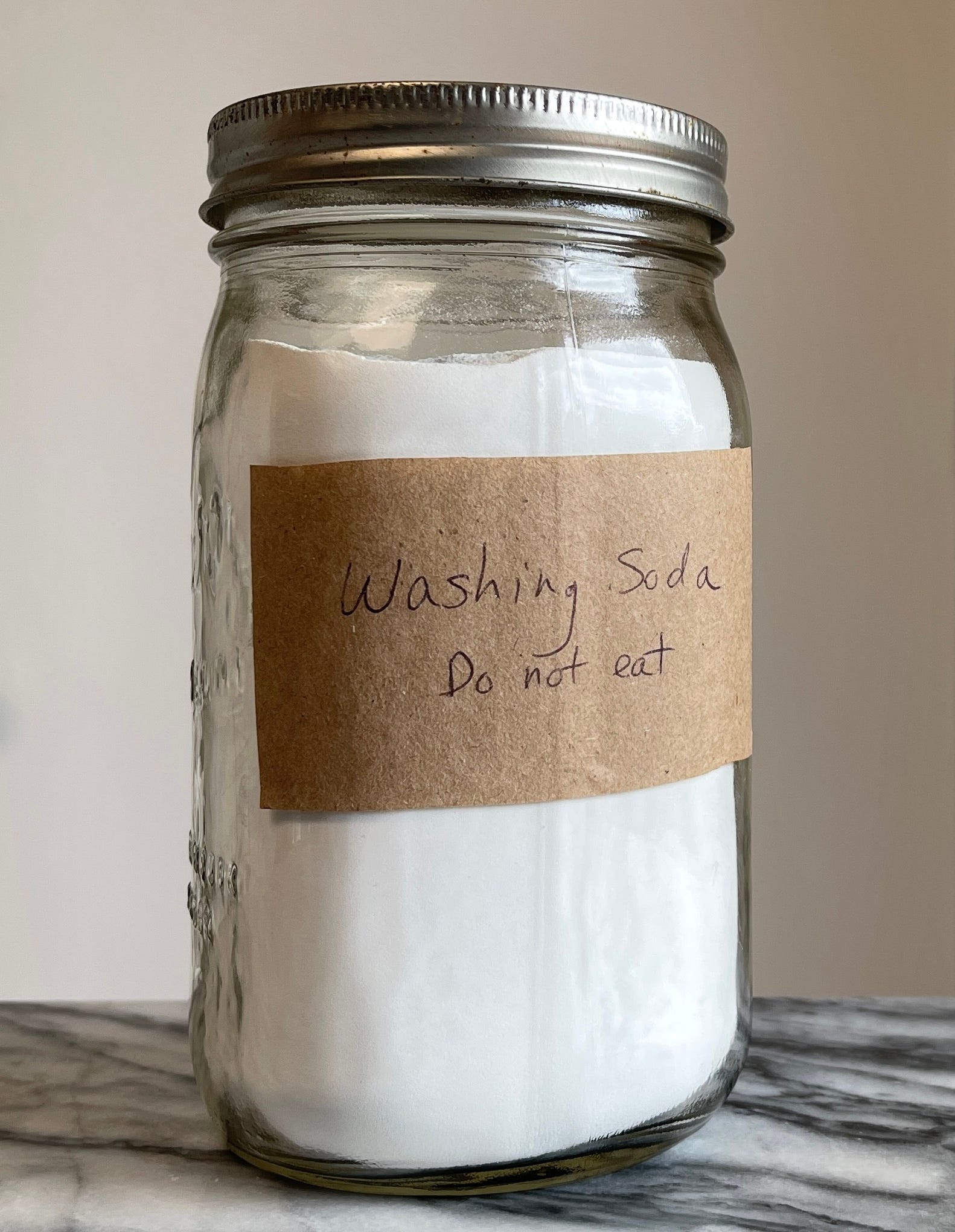
Washing soda. This boosts laundry detergent and can go into other homemade cleaning products. You may have to search for it a bit. A store not too far from me carries Arm & Hammer Washing Soda in a box. A bulk store far from me also carries washing soda in bulk. You can also “make” it out of baking soda. Go here for the instructions. My husband loves this stuff so much that I have to hide it or he will use it all up. Then again, he does laundry if it’s around…
Chestnut laundry soap. Autumn is horse chestnut season! Horse chestnut trees grow in temperate areas of North America, Europe and Asia and are ready to forage around October. You can make mild laundry detergent out of these. Go here for the horse chestnut laundry soap recipe.
Bulk detergents. I’m fortunate to live near bulk stores that sell milder detergents. I buy powdered detergent and also greywater-safe, liquid detergent to use when I turn on our laundry-to-landscape greywater system.
Bonus, laundry tip: Try bleaching dampened whites outside on a sunny day (it may take a few days of sunshine). Also, wear an apron when you cook to protect your clothes and extend their life!
Static busters
While some liquid fabric softeners score As from EWG, many name brand or eco-sounding products score Ds and Fs. In addition to these concerns, polyester dryer sheets shed microplastics into the laundry and the air and the dryer sheets themselves add to our overburdened landfills after each load of laundry. Most of these products also contain endocrine-disrupting phthalates (look out for “scent” on the package). These products waste your hard-earned money. Just some solutions:
Dry less. Over-drying leads to static cling. Dry a little less to avoid it.
Wool dryer balls. These replace dryer sheets and fabric softener. They cost more up front but you buy them only once and they pay for themselves over time. When choosing dryer balls, look for pure wool. Some dryer balls contain added synthetic materials or “bio-based synthetic.” Or stop worrying about static cling and use nothing! (However, dryer balls should cut down drying time, conserving energy and money.)
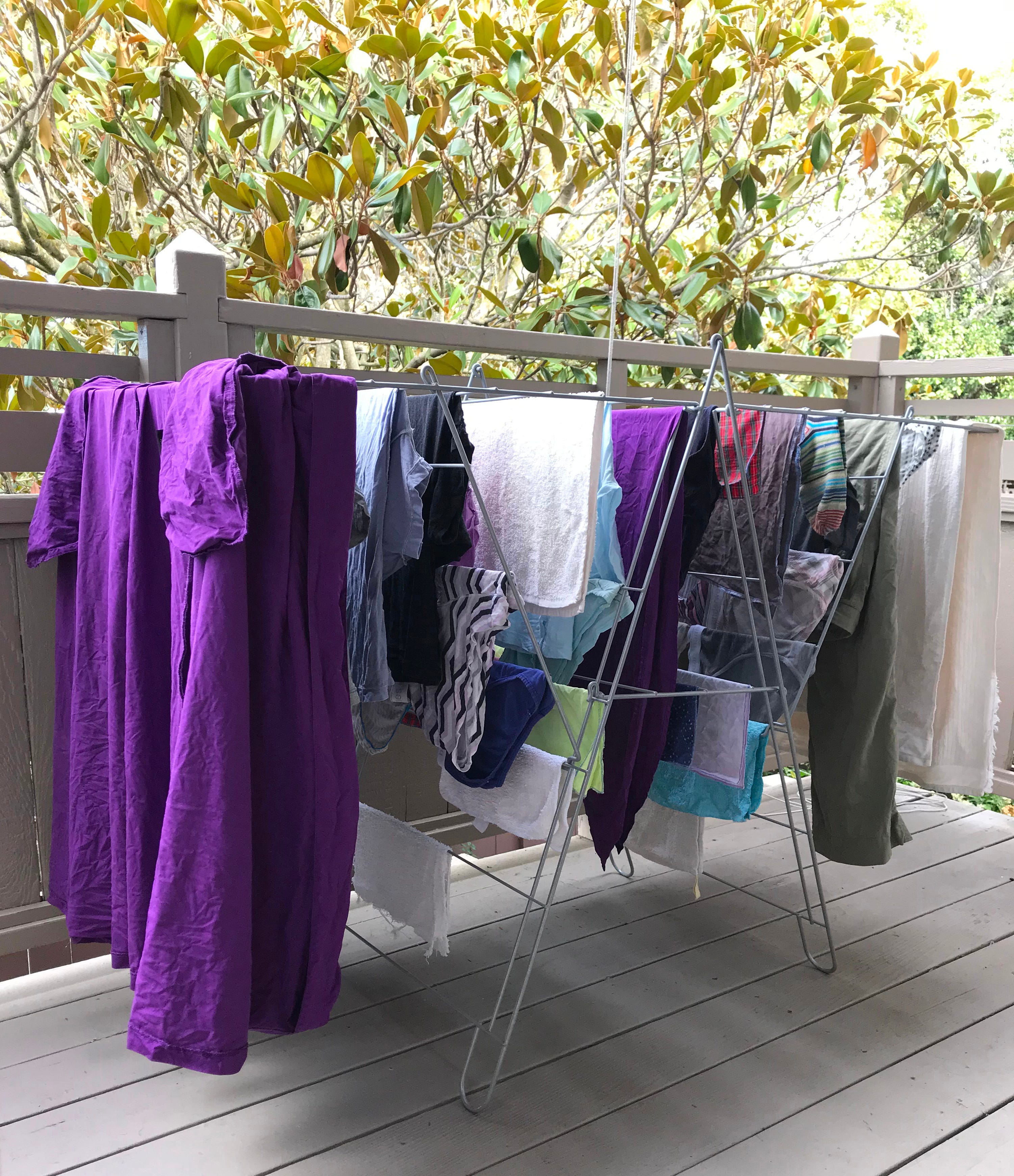
Clothesline or drying rack. If you have space for an outdoor clothes line or a drying rack indoors, hang drying eliminates static cling (static occurs in the dryer.) Your towels may not be soft like those coming out of a dryer but think of the free exfoliation treatment as you dry off after a shower.
Microplastic prevention
Washing synthetic fabric releases hundreds of thousands of microplastics per load. The delicate cycle causes additional microplastic shedding. But washing in hot water on the regular cycle also sheds massively! Drying also releases microplastics into the air through the dryer vent. (For more information on microplastic-reducing laundry, go here.) Some strategies for your next load of laundry:
Fewer loads. Washing clothes less frequently releases fewer microplastics. I’m not suggesting we go around wearing dirty clothes. But if you’ve worn a pair of pants and they look clean and smell clean, they are clean. Laundering clothes only when necessary extends their life, they’ll shed fewer microplastics and you’ll conserve water, energy and whatever products you buy to wash them.
Hang drying. If you have a line or a clothes drying rack, hanging laundry on it to dry releases much less microplastic than a tumble dryer.
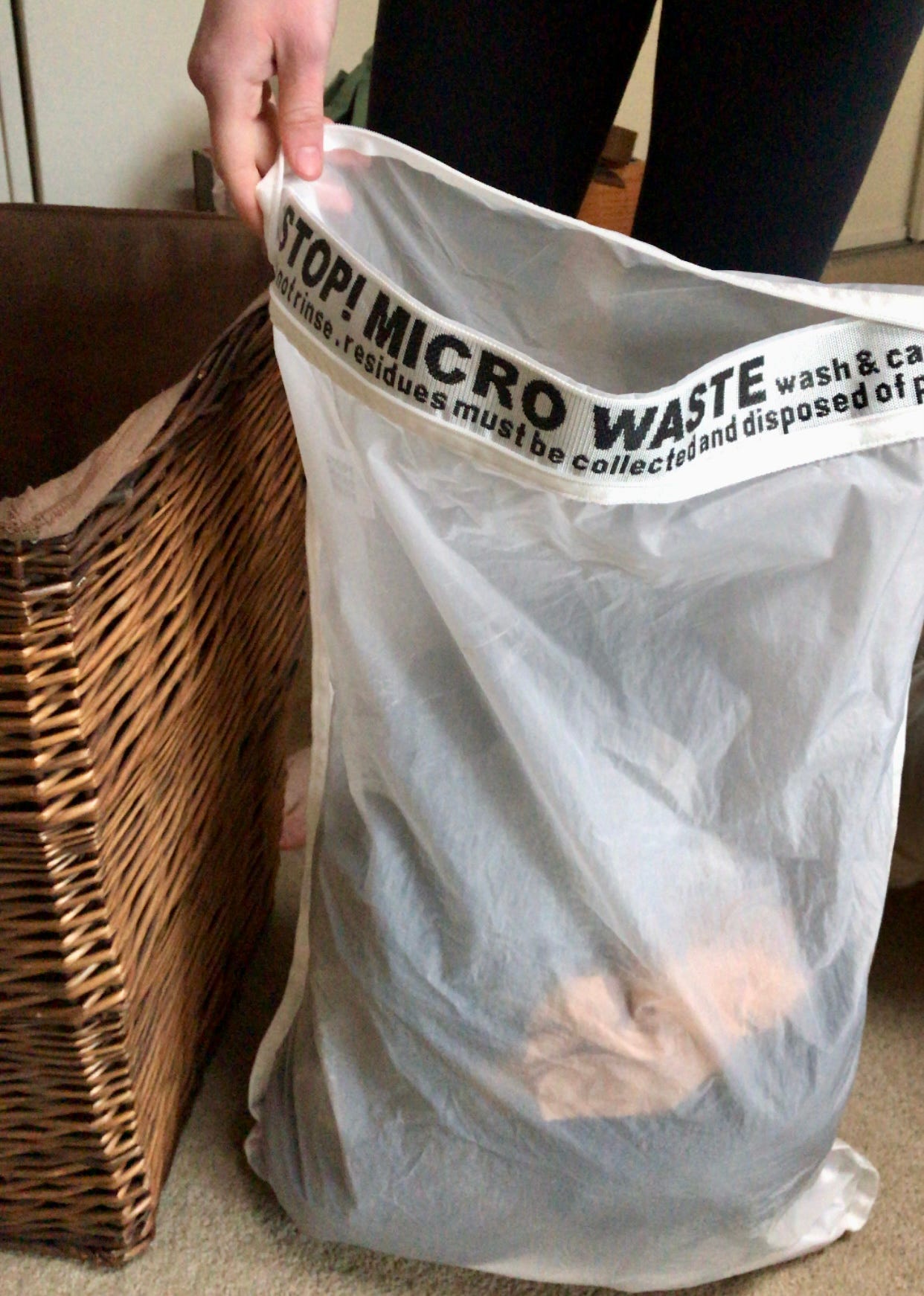
Washing bag. The Guppyfriend Washing Bag captures some of the microplastic that breaks off of material in the washing machine. However, you do have to buy more stuff (the bag) and it is made out of plastic, albeit a type of plastic different from the super-shedding plastic. I don’t use ours often because a) I forget and b) we no longer have a lot of synthetic clothes (but do have some). The bag holds a decent amount of clothing: a couple of pairs of pants, a few t-shirts and several pairs of socks, for example.
Filter attachments. While not yet mainstream, washing machine filter attachments can prevent significant amounts of microplastics from polluting the environment. Washing machine manufacturers need to add these. European campaigners have pushed for a filter mandate on new washing machines.
Other general household cleaning
Window cleaner. Skip the bottled blue stuff and instead, mix 1 part distilled vinegar with 3 parts water. Spray on the window. Scrub with a scrunched up piece of newspaper. (Use matte newsprint, not glossy inserts. Colored flyers are fine as well.) Scrunch up fresh pieces of newspaper and rub until dry. The newspaper will neither scratch the glass nor leave a trail of lint on it. This is the best way to leave windows clean and crystal clear. When you finish, compost the newspaper. The inks are non-toxic.
Carpets and flooring. Synthetic carpets and upholstery shed microplastics. To reduce the amount of microplastic you and your family breathe in, vacuum and mop often. For hardwood, instead of a dust mop with a disposable head, look for one with a washable cotton head like this one. Most mop heads are made of synthetic materials. You may have to search a bit but cotton heads do exist.
When you need to replace your carpet, consider natural fibers or wood or tile. Typical carpet is synthetic; natural fibers cost much more. (Ditto for upholstery and curtains made of natural fibers.) If you’re lucky, you may find wood flooring underneath your carpet. If you’re very lucky, it might not need refinishing. The coating on our hardwood floors might be water-based or it might be petroleum based; I don’t know. I’m not going to worry about it.
Worrying about every little thing will make you sick. Making some easy, safer cleaning swaps will not!
When I use vinegar water to decalcify my water jug and water bottles, I stopper the porcelain bathroom sink and dump the used vinegar water there, fill the rest with water and leave overnight at least some hours. The sink is then completely smooth with no scrubbing.
I’ve used the Blueland toilet tabs and they work fine. I read somewhere (maybe here?) that you should put your standard laundry on maximum spin and then that cuts your drying time. I started doing that last year and can now dry most loads in 45 minutes or less on low heat. And I do use wool dryer balls. I can’t handle synthetic fragrance of any kind any more, even in supposedly eco-friendly products (looking at you, Method brand), so I really appreciate the additional ideas here! And thanks for the reminder about the plastic mesh laundry bags 🙄. I’ve gone mostly to natural fabric clothes and then still throw delicates in those stupid mesh bags. Oh, well, progress over perfection!