
Planning for Better Days
Choosing native plants for the yard

The news is awful but only every time I read it. One thing I can do to improve my part of the world is to put more natives into the ground (or containers) to help mitigate the biodiversity crisis.
Currently, 1 million species on the planet face extinction. Bird populations have plummeted. (This doen not bode well for humans.) Planting native plants—in our yards, campuses, business places and so on—provides crucial habitat for wildlife in crisis. Plus, native plants require fewer pesticides and less water. And they look beautiful!
“But what’s in it for me?” you may be asking (but probably not). Surrounded by the nature I’ve brought into our yard improves my mood. Just walking around and checking in with my plants reduces my stress. Has the buckwheat recovered from its transplant? Does the sage still smell amazing? Have the oaks grown since I last looked? Getting my hands dirty also improves my microbiome, which affects my overall health. That’s not wellness-guru-level misinformation, that’s science.
Four years of planting natives!
I started planting native plants in early 2022, immediately after reading Douglas Tallamy’s book, Nature’s Best Hope. The most important lesson I’ve learned in those four years is to start.
When choosing plants, I look at the inventory list of my favorite nursery, Grassroots Ecology in Palo Alto. Grassroots is much more than a nursery though. This nonprofit organization offers volunteer opportunities, provides hands-on education, stewards the land and much more.
Before ordering a plant that I’m drawn to on the inventory list, I first research that plant on my favorite website, Calscape, a project of the California Native Plant Society. You can search for native plants on Calscape suitable to your area of California—down to your zip code!—read each plant’s profile, find nurseries near you, find landscape professionals near you, plan your garden and more. I keep track of what I’ve planted in various plant lists I’ve set up on Calscape. Don’t live in California? Go here for a list of native plant societies in the US and Canada.
(I have not been paid to gush about Grassroots Ecology or Calscape. I just really love them both.)
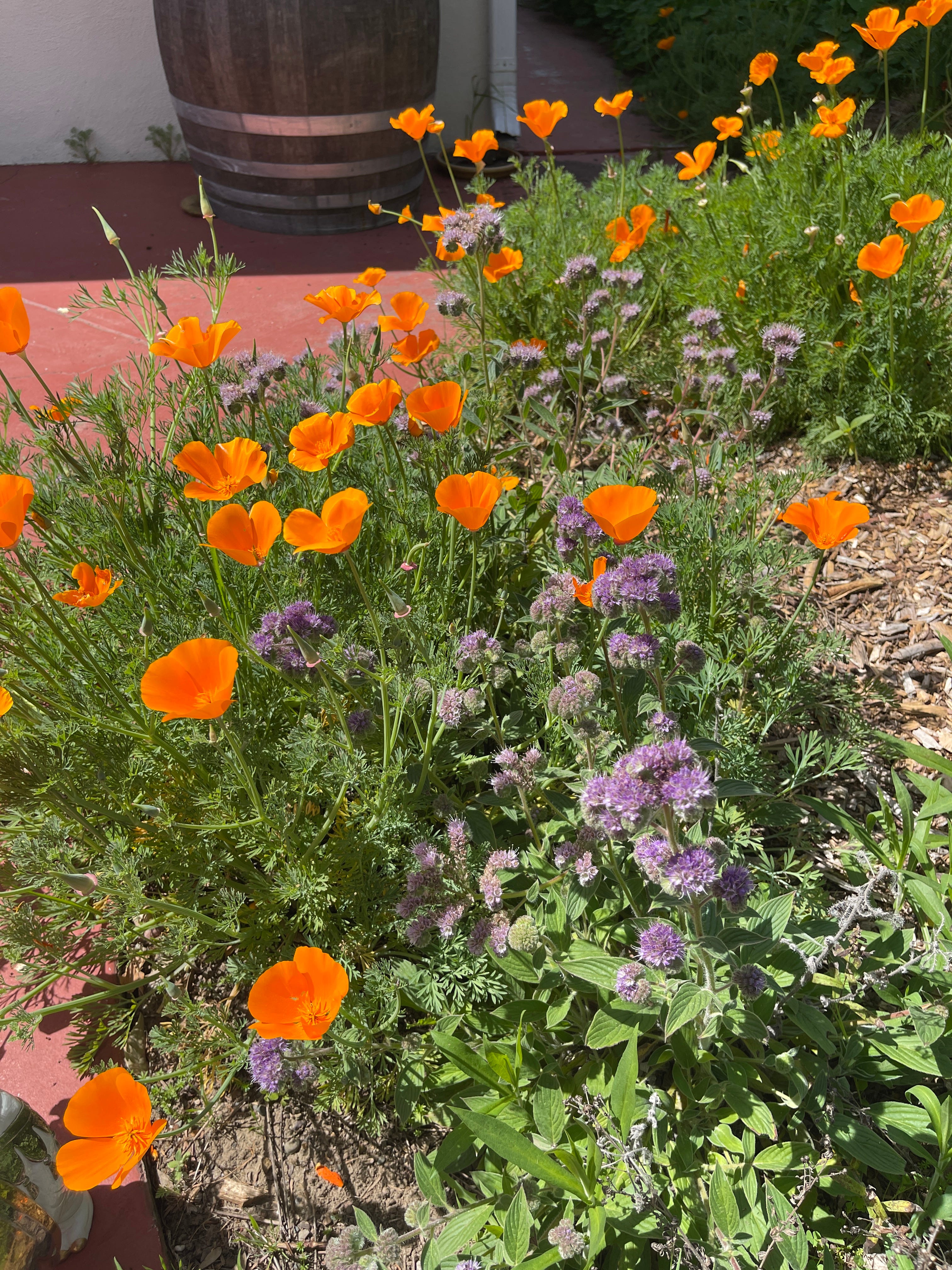
My plant criteria
Your criteria will differ from mine. I’m planting native so the first criteria is that the plants are actually native. Other criteria I consider include:
Sun. I’m running out of sunny spots so I need to find plants that do well in partial shade or, even better, deep shade of which I have lots.
Water. I’ll choose plants that require little water. Currently California is not experiencing drought. But in my 28 years of living here, we experience drought more often than not. As climate change worsens, I’m preparing for a drier and hotter future.
Evergreen. I’ve planted lots of deciduous plants already. To my family’s (and probably neighbors’) chagrin, I leave these standing over the winter. Critters rely on them. Certain bees hibernate inside plant stems. Some insects eat seeds that flowers leave behind. Ditto for birds. So while I’d prefer more evergreen plants to balance out some of the deciduous ones, that’s not a deal breaker.
Flowering season. I’d like to add more plants that bloom in the winter. I have spring, summer and fall covered well but want to support wildlife year-round.
Flowering time. After reading Night Magic: Adventures Among Glowworms, Moon Gardens, and Other Marvels of the Dark, by Leigh Ann Henion, I’ve started looking for plants that bloom in the evening.
Space. Do I have room for it? Unless the plant in question grows into a 10 foot tall by 15 foot wide shrub, I’ll find space for it somewhere.
Fortunately, several plants listed in the current inventory don’t meet my criteria (too large or require too much sun or too much water), which keeps me in check. Otherwise, I’d order all the plants.
Possible plant contenders
I try to control myself and order 12 or fewer plants at a time. That might not sound like many plants, but I have to Jenga them into the yard and plan where they’ll go—it’s getting pretty full. Once I settle on a spot, I inevitably notice weeds that I need to pull or a hedge that could use a haircut or a plant that looks thirsty… So for each plant I put in the ground, I’m usually outside for at least an hour. Not that I don’t love being out there. I just take a while to plant everything.
Broadleaf Lupine (Lupinus latifolius)
I don’t have a lupine. They have such beautiful flowers. Broadleaf Lupine attracts bats (and bees and birds and butterflies and caterpillars). Bats are crucial pollinators that get a bad rap (thanks Halloween!). This lupine meets my other criteria: it can thrive in full sun, partial shade or deep shade; it requires only low water; it’s native to my area. I still have lots of space in shady areas, so I have a few spots to choose from for this tall plant (it grows up to seven feet tall).
Bee’s Bliss Sage (Salvia ‘Bee’s Bliss’)
This evergreen shrub has been on my wish list for a couple of years. And now the nursery has it! Bee’s Bliss Sage grows quickly, requires low water and full sun or partial shade and smells pleasant. It can grow to 2 feet tall by 6 to 8 feet wide—I’ll find a spot for it.
Hooker’s Evening Primrose (Oenothera elata ssp. hookeri)
In addition to meeting my sun and water requirements, this plant blooms in the late afternoon or dusk. Cool! It will drop its leaves in the winter but that’s okay. I don’t need to choose only evergreen plants. Hooker’s Evening Primrose can grow up to 5 feet tall by 5 feet wide. (I’m picking sort of large plants…)
Blue Dicks (Dipterostemon capitatus)
Here’s a small plant. It grows up to 2 feet tall and only 2 inches wide. The purple flowers are pretty, the plant requires little water and it does well in sun or partial shade. It’s also deciduous. That’s fine. I think I’ll order four, plant them in different areas and see where they do best.
Yellow Mariposa Lily (Calochortus luteus)
Calscape says this lily plant is suitable for containers. Great! Since I am running short on space, I think this spring, I’ll plant in a few pots. Most of my large terracotta planters either sit empty or, if filled with soil, have sprouted Red Valerian, a plant that, while not technically invasive, will spread all over the place if left unchecked. Yellow Mariposa Lilies grow up to 2 feet tall and 6 inches wide.
Withered Snapdragon (Antirrhinum thompsonii)
I love snapdragons. At a final size of 1 to 2 feet tall, these can go into planters as well if I can’t find a spot for them in the ground. They require full sun—I have plenty on my barren patio.
California Polypody (Polypodium californicum)
I don’t have a single fern but I do have deep shady areas that ferns like. California Polypody requires very little water as well. If it doesn’t dry out during the summer heat, it may stay green year-round. California Polypody grows up to 2 feet tall by 3 feet wide. I’ll order a couple.
California buttercup (Ranunculus californicus)
This plant has also been on my wish list for a couple of years. It requires no water once established, so I’ll plant it around my ceanothus plants that will die if I water them in the dry summer—they will get along well. The yellow buttercups will look beautiful next to the blue ceanothus—they both bloom in winter and spring.
Shining Mule Ears (Wyethia glabra)
Okay, one more plant! Shining Mule Ears belong to the aster family (I love asters) and require deep shade. I have lots of deep shade. I’ll order two or three of these small plants (they grow to only 1 foot tall).
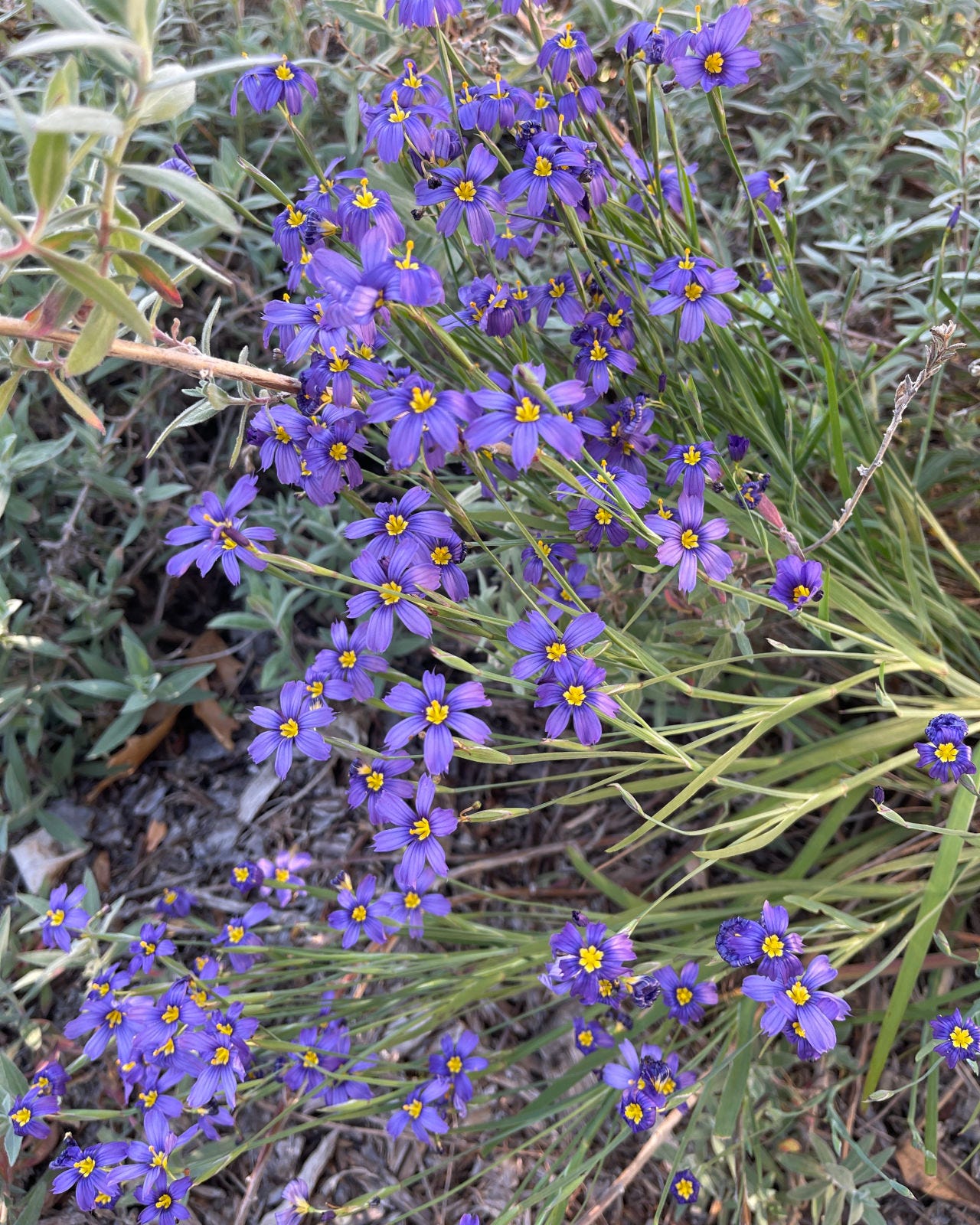
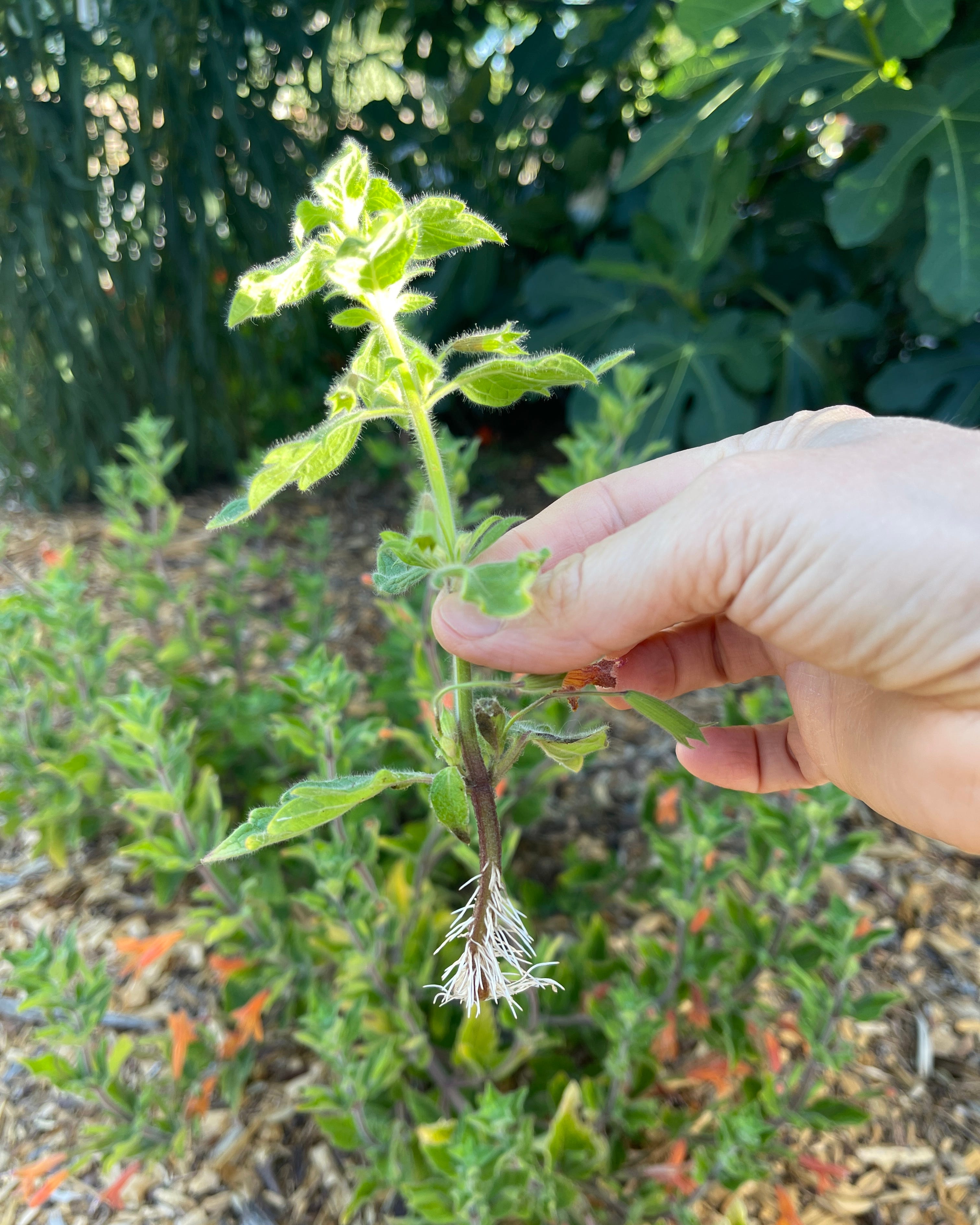
The inventory listed several plants I’ve planted and want more of. Instead of buying additional Blue-eyed Grass plants though, I’ll try to propagate some this year instead. I could also try to transplant Blue-eyed Grass babies that popped up last year. I’ve successfully propagated Monkey Flower Savory from a cutting. Good thing, because the mama plant died. Its clone has thrived in a different location however.
Maybes
I’m really tempted to order more but I’ll run out of space and money. If the nursery has sold out of any of the plants above, I’ll order something from the list below.
Books
If you can’t dig into the soil right now, consider grabbing a good nature book or two. I loved these:
The Serviceberry: Abundance and Reciprocity in the Natural World, Robin Wall Kimmerer (I planted two serviceberry plants in 2022!)
Braiding Sweetgrass: Indigenous Wisdom, Scientific Knowledge and the Teachings of Plants, Robin Wall Kimmerer
Nature’s Best Hope: A New Approach to Conservation That Starts in Your Yard, Douglas Tallamy
How Can I Help? Saving Nature with Your Yard, Douglas Tallamy
The Backyard Bird Chronicles, Amy Tan
The Milkweed Lands, An Epic Story of One Plant: Its Nature and Ecology, Eric Lee-Mäder
The Comfort of Crows: A Backyard Year, Margaret Renkl
The Light Eaters: How the Unseen World of Plant Intelligence Offers a New Understanding of Life on Earth, Zoë Schlanger
Entangled Life: How Fungi Make Our Worlds, Change Our Minds & Shape Our Futures, Merlin Sheldrake
Night Magic: Adventures Among Glowworms, Moon Gardens, and Other Marvels of the Dark, Leigh Ann Henion
Please add your book recommendations as well!
I’m planting natives with no chemicals in upstate NY. Those with human edible berries, nuts, leaves get first place. My goal is to be an ARK (like Reynolds in IRE describes). The native plants need to not only survive in our yards, but spread! Ants, birds, fox, bears - all sorts of creatures that eat the fruits can spread the seeds. Humans can be PART of the system again, by helping as well as benefitting. Life-changing books included We are the Ark by Mary Reynolds and The Forager’s Garden by Anna Locke. They both reside in the UK so reference their own native plants. But The Ark is about philosophy and design; Forager’s is about philosophy and Practical aspects like sustainable watering. I also was greatly motivated by Tallamy and Kimmerer. The predecessor to Tallamy, Sara Stein’s book Noah’s Garden is excellent for any northeastern naturalists. She especially turned me onto the beauty of blueberries in the landscape. Native, edible plants can be in every yard!
Really enjoyed your article. Your goals are similar to mine. In addition to those, my focus is on edible & medicinal beauties for animals/insects & my family. Sadly, as I now live in suburbia, I don’t have as much land. Also, I have grown to be less interested in maintaining a typical yard with all the chemicals. Thanks for the many references. I’ll try to find a Texas equivalent.