
Countertop "Composting" Appliances Neither Compost nor Reduce Wasted Food
They merely dehydrate and grind up food scraps

Some companies call their models countertop composters. Others, food recyclers. In describing Vitamix’s version, Amazon takes a throw-spaghetti-at-the-wall approach, hoping something sticks to a potential buyer: “Convenient Home Food Processor and Recycler | Kitchen Countertop Modern Composter Bin Alternative | Electric Food Waste Disposer | Odorless Food Waste Bin.”
These supposedly eco, expensive appliances—they can cost up to $1,000—do not compost food scraps and wasted food. They dehydrate that material and grind it up. Think of them as upscale electric waste bins for food.
The claims
Some companies lay on the greenwashing pretty thickly. One claims its charcoal filters—which you buy regularly to reduce odors, by the way—will break down in a backyard compost bin or landfill. Where to start with that one?
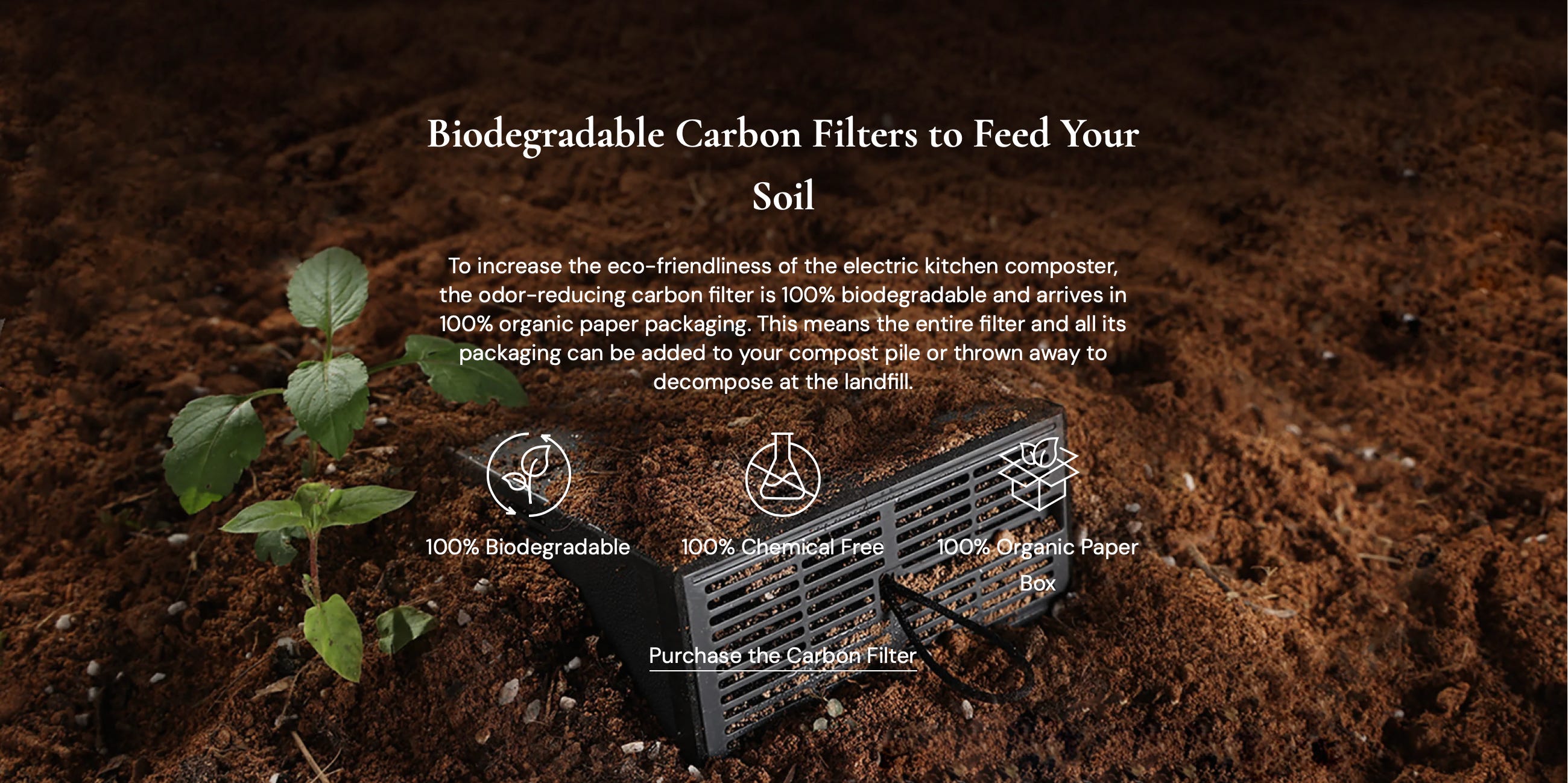
First, why would anyone put food scraps into an expensive countertop-hogging appliance if they have a backyard compost bin that they put the machine’s charcoal filters into?
Second, if these filters break down completely in a landfill as claimed, that means they consist of organic material, which would emit pollution (methane) in a landfill just as food does. This contradicts one of the major claims of these appliance makers—that the appliances reduce greenhouse gas pollution in landfills.
Third, the filters look like plastic. Perhaps they consist of bioplastic. If so, bioplastic, like standard plastic, does not break down in a backyard compost bin. It requires an industrial composting facility. I contacted the company to find out what material the filters consist of and didn’t hear back. (Go here to read about “compostable” plastic.)
Reduce waste
The manufacturers of these appliances claim that their machines reduce waste. They do not.
If I buy an apple and it rots, I have wasted it. Whatever I do with the rotting apple at that point does not reduce the waste I have generated. Whether I throw the apple in an actual compost bin that transforms it into rich, soil-enriching compost or throw it into an expensive dehydrating food grinding machine, I have wasted an apple.
What these machines do is reduce the volume of the food that consumers drop into them by dehydrating it. Produce especially contains a large percentage of water. Watermelon, at the high end, consists of 92 percent water. So if put a few sad watermelon slices into one of these appliances, the volume of the watermelon I have wasted will shrink dramatically. But I have still wasted those few slices of watermelon.
Produce compost
Oh dear.
Composting is the managed, aerobic (oxygen-required) biological decomposition of organic materials by microorganisms. Organic (carbon-based) materials include grass clippings, leaves, yard and tree trimmings, and food scraps. The end product is compost, a biologically stable soil amendment that can be used to build soil health and provide nutrients to plants. Microorganisms feed on the materials added to the compost pile during the composting process. They use carbon and nitrogen to grow and reproduce, water to digest materials, and oxygen to breathe.
— EPA
These appliances do not produce compost. They produce dehydrated ground-up food. Some of the more transparent companies no longer call the dehydrated material “compost.” Mill refers to it as “Food Grounds” (and always in the form of a proper noun, like a product name).
In brazen acts of false advertising, a couple of the companies I researched (this one and this one) call their appliances “kitchen composters.” Both companies sell optional microbes (here and here) that you add to the food scraps after running them through the machine and removing them from it. Set that separate container aside for three or four weeks and it becomes compost. You do not add the microbes to the “kitchen composter” during processing. In other words, the “kitchen composter” does not produce compost.
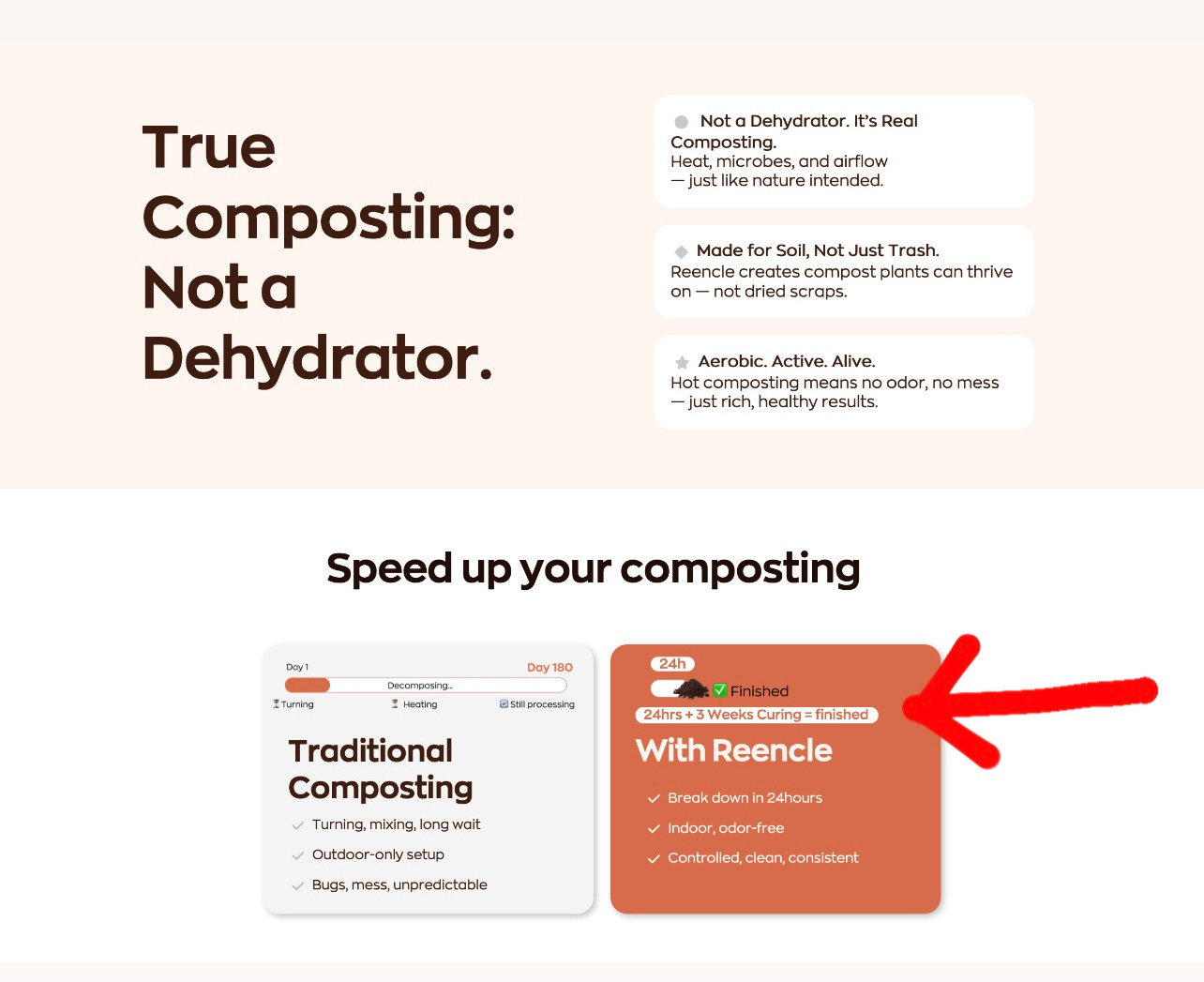
Both companies suggest adding the finished compost to the garden. But if you have a garden, you could probably compost outside. Even in winter. My sister lives in Canada and has composted year round for decades. The food freezes outside in her bin, thaws in the spring, then breaks down. You can’t actually stop food from composting. And if you garden, you don’t mind getting your hands dirty. You probably look forward getting your hands dirty. You can no doubt handle dumping a bucket of food scraps into a compost bin outside.
In the spring, at the end of the day, you should smell like dirt.
Whether you take the extra steps to turn the dehydrated food scraps into compost or not, you may actually waste more food if you buy this appliance because you might think, “Oh I can just throw this apple I didn’t eat into my countertop thingamajig.” In this study, “Among people who reported composting, 41% indicated that because they compost, discarding food does not bother them.” This study found that almost “three-quarters (71.8%) feel less guilty about throwing out food that is composted.”
Don’t get me wrong. Composting—which I have done for over 20 years—while crucial, is also last resort for wasted food. Ideally, we would eat all the food we buy. But waste happens. When it does, that food belongs in a compost system of some sort (unless you have chickens you can feed it to).
Go here for composting indoors and out.
Keeps food out of landfill
I think these appliances appeal to apartment and condo dwellers in regions with no curb-side pickup of food scraps. But they still do not address the problem of disposal. After the machine finishes dehydrating and grinding up the food, then what?
Although the appliance has sucked the water out of the food, the food remains. If it ends up in a landfill, anaerobic bacteria will break it down and emit planet-heating methane pollution just as it would if the food scraps went directly to the landfill before dehydration and grinding. However, with the water removed from it, the food’s volume has shrunk, so a garbage truck hauling it to a landfill will consume less energy. I’d have to do some pollution math for this: Would fossil fuel-burning trucks cancel out the methane prevented in a landfill?
Even if you did buy the microbes to turn the material into real compost in a separate container over three to four weeks, you have to put it somewhere unless you want compost piling up in your home.
The appliance manufacturers offer disposal “solutions”:
Add the ground-up dried food scraps to your garden. But if you have access to a garden…
Put the material in the green bin. But why wouldn’t you simply place your food scraps in a green bin if your city picks up organics? Why add another step that requires an expensive appliance and consumes energy?
Feed your chickens. Why wouldn’t you feed your chickens food scraps directly rather than dehydrating them first? Anyone who has ever tossed corn cobs into a chicken coop knows how much chickens love food scraps.
Send them to a farm. Box up your dehydrated food scraps and Mill will pick them up and ship them to a farm for a fee. That’s a lot of transport. Again, I’d need to do pollution math for this one. Does the reduced weight of the food and the landfill diversion offset the shipping energy and shipping materials?
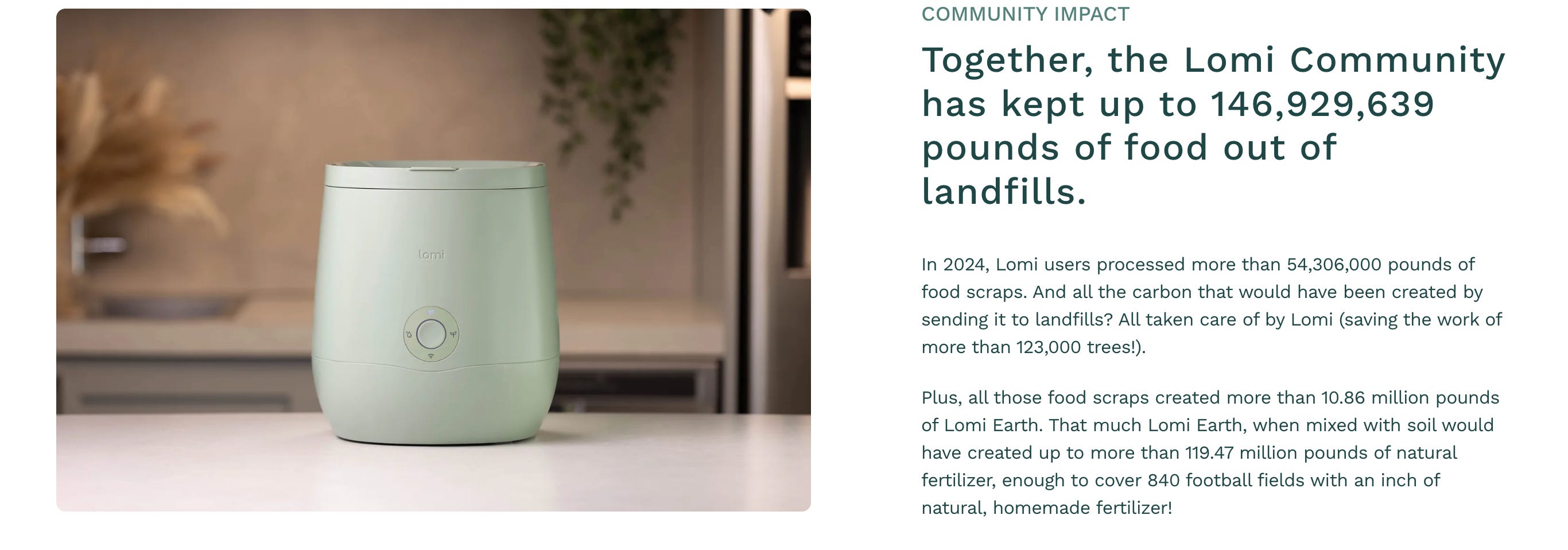
Above, Lomi claims that its machines kept almost 150 million pounds of food out of landfills. Does this number assume: 1) Lomi users do not send their dehydrated food scraps to landfill and 2) every customer uses their Lomi regularly? Does this number include the reduced weight of the food due to dehydration? (I have so many questions.) The fine print explains (vaguely): “Lomi Community Impact is calculated using a robust combination of real-world data from Lomi 2 devices, customer interviews, and studies that have informed our reporting. They will continue to evolve as underlying data sets grow and mature.”
Take the trash out less often
This claim holds up. By decreasing the volume of the food scraps and wasted food you process in the appliance, you will fill fewer trash bags. But I can think of lots of other ways to fill fewer bags and those methods don’t require spending hundreds of dollars on an appliance that occupies precious kitchen real estate. All of do them involve reducing waste before it happens, however.
Think of these appliances along the lines of plastics recycling. Recycling plastic doesn’t stop plastic pollution; food scrap dehydrators don’t stop wasted food. Neither does composting for that matter. Composting, again, while crucial, does not reduce the amount of food going to waste. Instead, it disposes of that waste in a regenerative way, sequestering carbon and creating a rich soil amendment.
How to reduce wasted food
The marketing claims for some of these machines are wild. The best way to reduce the amount of food going to waste is to eat more of the food we buy before it heads south. I have many, many simple tips to help you do that. Go here, here and here for starters. But I’ll repeat my top tip here: Shop at home. To do that, take a quick inventory of the food you have on hand and make your next meal out of it. You’ll eat more of the food you’ve already bought, put off shopping (in a store) for another day and have fun getting creative in the kitchen, all while saving money.
Reduce energy consumption too
The Lomi consumes about 1.0 kWh per cycle, less than a dishwasher. But it’s not nothing. And composting consumes zero energy. Like anything, manufacturing and shipping these appliances requires energy. And what happens to them at the end of their useful life? Disposal, again, becomes a dilemma.
Companies that mislead people who want to do the right thing really push my buttons. There are so many -- Ridwell, Terracycle, Trashie, and others. That pisses me off.
From experience here. I have a cottage that is used 4 months a year. I tried regular composting for 20 years and the bins never turned to compost and amusingly attracted bees and snakes. And our trash is only picked up every other week. Lomi has been perfect for me. Maybe not for everyone…but it is perfect for my situation.